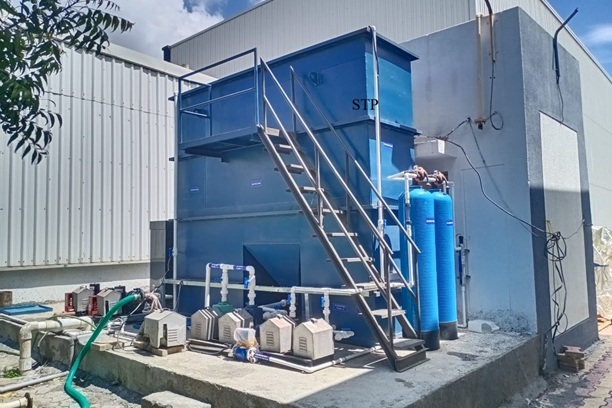
Envocare Projects & Services is one of the leading Sewage Treatment Plant Manufacturers in Maharashtra, delivering advanced and customized sewage treatment solutions for residential, commercial, industrial, and institutional applications. With extensive industry experience and a proven engineering approach, we have successfully completed 500+ Water & Wastewater Treatment Projects, supported by a team of 50+ expert engineers and technical professionals, while operating and maintaining 120+ treatment plants for industrial and commercial clients. Trusted by 300+ satisfied clients, we design high-performance Sewage Treatment Plants (STPs) that ensure efficient wastewater treatment, water reuse, regulatory compliance, and long-term operational reliability.
Apart from being a trusted Sewage Treatment Plant Manufacturer in Maharashtra, Envocare Projects & Services is also recognized as one of the leading suppliers, dealers, and service providers of complete sewage and wastewater treatment solutions. We provide turnkey services including system design, manufacturing, supply, installation, commissioning, operation & maintenance (O&M), plant upgradation, and technical support. Our expertise includes Sewage Treatment Plants (STP), Effluent Treatment Plants (ETP), Water Treatment Plants (WTP), Reverse Osmosis (RO) Plants, and Zero Liquid Discharge (ZLD) Systems, helping clients achieve sustainable wastewater management, water conservation, environmental compliance, and cost-effective operations.
A A Sewage Treatment Plant (STP) is a wastewater treatment system that collects and treats domestic and commercial sewage before safe discharge or reuse. It uses physical, biological, and chemical processes to remove solids, organic matter, harmful microorganisms, nutrients, oil, and grease, while reducing pollutants such as BOD, COD, and TSS.
Treated water can be safely discharged or reused for non-potable purposes such as toilet flushing, landscaping, gardening, and cooling, in accordance with applicable standards. STPs support sustainable water management by reducing pollution, conserving freshwater, and enabling wastewater reuse.
As experienced Sewage Treatment Plant Manufacturers in Maharashtra, we design and manufacture efficient wastewater treatment systems that process sewage through multiple stages. Each stage is designed to remove solids, organic pollutants, suspended particles, and harmful microorganisms to produce treated water suitable for reuse, recycling, or safe discharge, depending on the application and applicable standards.
| Step | Sewage Treatment Process | Description |
|---|---|---|
| 01 | Preliminary Treatment – Screening & Grit Removal | Incoming sewage passes through screens to remove large solids, plastics, rags, and other debris. Grit removal then separates sand, gravel, and other heavy particles, helping protect treatment equipment and maintain smooth plant operation. |
| 02 | Primary Treatment – Sedimentation | During primary settling, heavier suspended solids settle at the bottom of the tank, while oil, grease, and floating impurities are removed from the surface. This reduces the solid and organic load before biological treatment. |
| 03 | Secondary Treatment – Biological Treatment | Beneficial microorganisms break down dissolved and biodegradable organic matter present in the wastewater. This biological treatment significantly reduces pollutants and improves the quality of the treated water. |
| 04 | Tertiary Treatment – Filtration & Disinfection | Advanced treatment methods such as fine filtration and disinfection remove remaining suspended particles and harmful microorganisms. Depending on the treatment quality achieved, the water can be considered for suitable non-potable reuse or compliant discharge. |
| 05 | Sludge Treatment & Management | Sludge generated during the treatment process is collected and managed through processes such as thickening, dewatering, and, where applicable, anaerobic digestion. Proper sludge management supports safe disposal and potential beneficial reuse. |
A well-designed Sewage Treatment Plant (STP) combines physical, biological, and advanced treatment processes to achieve consistent wastewater treatment performance. Depending on the project requirements, factors such as sewage characteristics, treatment capacity, available space, water-reuse objectives, and applicable discharge standards are considered when selecting the appropriate treatment technology.
As Sewage Treatment Plant Suppliers in Maharashtra, we offer a wide range of advanced sewage treatment technologies tailored to different capacities, spaces, and operational requirements.
| Parameter | MBBR | SBR | MBR | ASP | Extended Aeration | Conventional STP |
|---|---|---|---|---|---|---|
| Technology | Moving Bed Biofilm Reactor | Sequential Batch Reactor | Membrane Bioreactor | Activated Sludge Process | Extended Aeration | Multi-stage Biological Treatment |
| Typical Capacity | 25–5,000+ KLD | 50–10,000+ KLD | 50–5,000+ KLD | 100–50,000+ KLD | 25–2,000+ KLD | 100–50,000+ KLD |
| Primary Biological Process | Attached-growth biofilm | Suspended-growth activated sludge | Suspended growth + membrane filtration | Suspended-growth activated sludge | Suspended-growth activated sludge | Primary + secondary biological treatment |
| Flow Handling | Continuous | Batch / Cyclic | Continuous | Continuous | Continuous | Continuous |
| Biological Reactor | Aeration tank with floating bio-media | SBR reactor basin | Bioreactor + membrane tank | Aeration tank | Extended aeration tank | Primary clarifier + aeration tank |
| Bio-Media / Membrane | HDPE/PP floating media | No fixed media | UF/MF membrane modules | No fixed media | No fixed media | Usually no specialized media |
| Typical Media Filling | 30–60% | Not applicable | Not applicable | Not applicable | Not applicable | Not applicable |
| Media Surface Area | ~400–1,200 m²/m³ | Not applicable | Not applicable | Not applicable | Not applicable | Not applicable |
| Typical MLSS | 2,500–5,000 mg/L | 3,000–5,000 mg/L | 6,000–12,000 mg/L | 2,000–4,000 mg/L | 3,000–6,000 mg/L | 2,000–4,000 mg/L |
| Typical F/M Ratio | 0.10–0.40 | 0.05–0.20 | 0.05–0.15 | 0.20–0.50 | 0.05–0.15 | 0.20–0.50 |
| Typical HRT | 3–8 hr | 6–12 hr/cycle | 3–8 hr | 4–8 hr | 18–30 hr | 6–10 hr |
| Typical SRT | 10–30 days | 15–30 days | 20–60+ days | 5–15 days | 20–40 days | 5–15 days |
| Aeration DO | 2–4 mg/L | 1.5–3.0 mg/L | 1.5–3.0 mg/L | 1.5–3.0 mg/L | 1.5–3.0 mg/L | 1.5–3.0 mg/L |
| BOD Loading | 0.2–1.0 kg/m³·day* | 0.1–0.5 kg/m³·day* | 0.2–1.0 kg/m³·day* | 0.3–1.2 kg/m³·day* | 0.1–0.4 kg/m³·day* | 0.3–1.0 kg/m³·day* |
| Secondary Clarifier | Generally required | Normally not required | Not required | Required | Required | Required |
| Typical BOD Removal | 90–95%+ | 90–95%+ | 95%+ | 90–95%+ | 90–95%+ | 90%+ |
| Typical COD Removal | 80–90% | 80–90% | 90–95%+ | 80–90% | 80–90% | 80–90% |
| TSS Removal | High after clarification | Very high | Very high / membrane-grade | High after clarification | High after clarification | High after clarification |
| Typical Treated TSS | ≤10–20 mg/L with tertiary treatment | ≤10–20 mg/L | Typically <5 mg/L | ≤10–20 mg/L with tertiary treatment | ≤10–20 mg/L | ≤10–20 mg/L with tertiary treatment |
| Tertiary Treatment | PSF/ACF + disinfection as required | Filtration + disinfection as required | Membrane filtration + disinfection as required | PSF/ACF + disinfection as required | Filtration + disinfection as required | Generally required for reuse |
| Disinfection Options | Chlorination / UV | Chlorination / UV | UV / Chlorination | Chlorination / UV | Chlorination / UV | Chlorination / UV |
| Treated Water Quality | Good–Very Good | Very Good | Excellent | Good–Very Good | Good–Very Good | Good |
| Footprint | Low | Low–Medium | Very Low | Medium–High | Medium–High | High |
| Automation Level | Medium–High | High | High | Medium | Medium | Medium |
| PLC/SCADA Integration | Available | Recommended | Recommended | Available | Available | Available |
| Operational Complexity | Medium | Medium–High | High | Medium | Low–Medium | Medium |
| Sludge Generation | Low–Medium | Low–Medium | Low | Medium | Low | Medium–High |
| Energy Requirement | Medium | Medium–High | High | Medium | Medium–High | Medium |
| Typical Power Consumption | ~0.5–1.0 kWh/m³* | ~0.6–1.2 kWh/m³* | ~0.8–1.5 kWh/m³* | ~0.5–1.0 kWh/m³* | ~0.6–1.2 kWh/m³* | ~0.5–1.0 kWh/m³* |
| Water Reuse Suitability | High with tertiary treatment | High with tertiary treatment | Excellent | High with tertiary treatment | Moderate–High | High with tertiary treatment |
| Space Requirement | Low | Low–Medium | Very Low | Medium–High | Medium–High | High |
| Maintenance Requirement | Low–Medium | Medium | Medium–High | Medium | Low–Medium | Medium |
| Capital Cost | Medium | Medium–High | High | Medium | Low–Medium | Medium |
| Best Application | Residential, commercial & industrial | Hotels, hospitals & institutions | Premium reuse & water recovery | Large continuous-flow projects | Small/medium decentralized STPs | Large conventional projects |
*Note: Indicative design ranges. Actual values depend on sewage characteristics, BOD/COD loading, temperature, treatment objectives, equipment selection, hydraulic conditions, and applicable discharge/reuse standards.
| Application | Recommended Technology | Typical Capacity Range | Key Advantage |
|---|---|---|---|
| Residential Society | MBBR / SBR | 50–2,000 KLD | Compact and reliable treatment |
| Commercial Building | MBBR / MBR | 25–1,000 KLD | Compact footprint and water reuse |
| Hotel / Resort | SBR / MBR | 100–2,000 KLD | Handles variable sewage flow |
| Hospital | SBR / MBR | 100–2,000 KLD | High-quality treated water |
| School / Institution | MBBR / Extended Aeration | 25–500 KLD | Simple operation and maintenance |
| Industrial Campus | MBBR / ASP / SBR | 250–10,000+ KLD | Scalable biological treatment |
| Large Township | ASP / MBBR / SBR | 500–10,000+ KLD | Suitable for continuous sewage generation |
| Municipal Project | ASP / Conventional STP | 1–50+ MLD | Large-scale treatment capability |
| Water Reuse Project | MBR | 100–5,000+ KLD | Superior filtration and reuse potential |
| Space-Constrained Project | MBR / MBBR | 25–5,000 KLD | Reduced plant footprint |
As an STP Manufacturer and Turnkey Wastewater Treatment Service Provider, we design each Sewage Treatment Plant based on the project's KLD/MLD capacity, inlet BOD, COD, TSS, sewage flow variation, hydraulic loading, organic loading, available area, treated-water reuse requirements, and applicable regulatory standards.
Our engineering approach includes technology selection, process design, equipment sizing, fabrication, installation, commissioning, automation, testing, operation and maintenance support. Depending on the project requirements, we provide MBBR, SBR, MBR, ASP, Extended Aeration, and Conventional STP solutions for residential, commercial, industrial, institutional, hospitality, healthcare, township, and municipal applications.
As STP Manufacturers and Suppliers in Maharashtra, we design and manufacture advanced Sewage Treatment Plants (STPs) with reliable treatment technology, durable construction, energy-efficient operation, and easy maintenance. Our solutions support effective wastewater management, water reuse, and compliance with applicable environmental standards.
As a trusted Sewage Treatment Plant manufacturer and service provider, Envocare delivers customized STP solutions, including manufacturing, installation, commissioning, and upgradation for diverse applications.
Project Overview: Envocare Projects & Services designed and commissioned a 500 KLD Sewage Treatment Plant (STP) for a residential township in Maharashtra, Maharashtra. The plant was developed to reliably treat domestic sewage generated from residential buildings and common facilities while enabling treated wastewater reuse for non-potable applications.
The residential development had an estimated design population of approximately 2,500 people, with average sewage generation of around 450 KLD and peak flow reaching approximately 550 KLD.
| Project Capacity | 500 KLD |
|---|---|
| Technology | Sequential Batch Reactor (SBR) |
| Application | Residential Township |
| Location | Maharashtra, Maharashtra |
| Design Population | Approximately 2,500 people |
| Average Sewage Flow | Approximately 450 KLD |
| Peak Sewage Flow | Approximately 550 KLD |
| Scope | Design, Manufacturing, Installation & Commissioning |
| Treated Water Reuse | Flushing and Gardening |
| Reuse Quantity | Approximately 350 KLD |
Challenge: The township required a wastewater treatment system capable of handling daily variations in sewage flow while maintaining consistent treated-water quality. Since a significant portion of the treated water was intended for reuse, suitable tertiary treatment and disinfection were also required.
Client Requirements:
Envocare's Solution: Envocare designed a customized 500 KLD SBR-based sewage treatment plant according to the project's hydraulic loading, wastewater characteristics, available space, and reuse requirements.
Treatment Process:
Screening → Grit Removal → Equalization → SBR Biological Treatment →
Tertiary Filtration → Disinfection → Treated Water Storage → Reuse
The SBR process provided controlled biological treatment through programmed fill, aeration, settling, and decanting cycles. Tertiary treatment and disinfection were incorporated to improve treated-water quality for the intended reuse applications.
Treatment Performance:
| Parameter | Influent | Target Treated Water |
|---|---|---|
| BOD (mg/L) | Approximately 250 | <20 |
| COD (mg/L) | Approximately 450 | <50 |
| TSS (mg/L) | Approximately 300 | <20 |
Project Outcome: The completed STP provided the residential development with a centralized wastewater treatment and recycling solution. Approximately 350 KLD of treated wastewater was made available for suitable non-potable applications, helping reduce dependence on freshwater for flushing and landscaping.
Project Delivered:
Key Project Highlight: A 500 KLD SBR-based STP designed to treat residential sewage and support approximately 350 KLD of treated-water reuse.
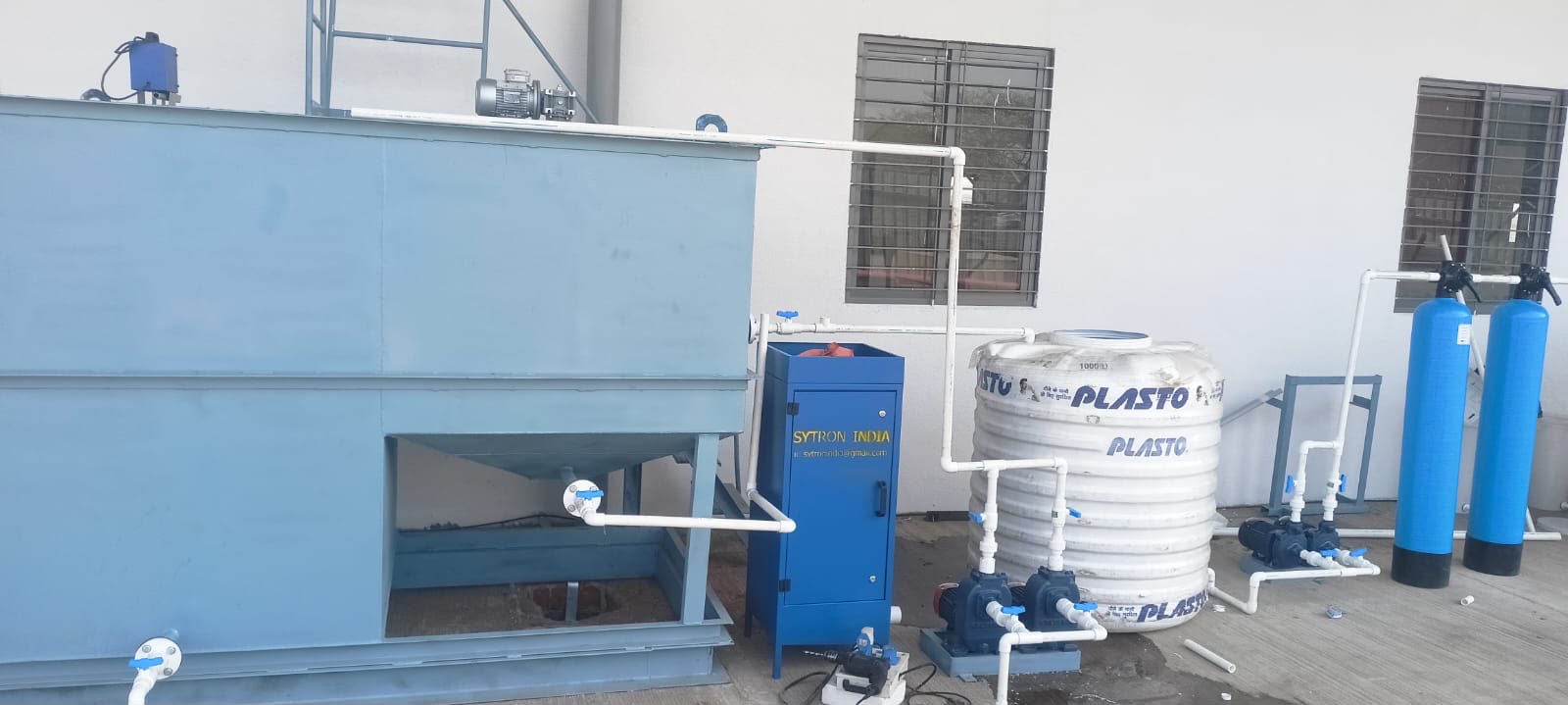
Project Overview: Envocare Projects & Services executed a 250 KLD MBBR Sewage Treatment Plant for a commercial business park in Hinjewadi, Maharashtra.
The facility generated wastewater from offices, washrooms, employee facilities, food-service areas, and other commercial activities. Due to limited space available for wastewater infrastructure, the project required a compact and efficiently arranged treatment system.
| Project Capacity | 250 KLD |
|---|---|
| Technology | Moving Bed Biofilm Reactor (MBBR) |
| Application | Commercial / IT Business Park |
| Location | Hinjewadi, Maharashtra |
| Average Flow | Approximately 220 KLD |
| Peak Flow | Approximately 275 KLD |
| Treated Water Reuse | Flushing and Landscaping |
| Reuse Quantity | Approximately 160 KLD |
Challenge: The main challenge was to provide reliable sewage treatment within a restricted installation area. The commercial facility also experienced fluctuations in wastewater generation due to variations in occupancy and operating schedules.
Client Requirements:
Envocare's Solution: Envocare developed a compact 250 KLD MBBR sewage treatment system based on the site's hydraulic loading and treatment requirements.
Treatment Process:
Screening → Grit Removal → Equalization → MBBR Biological Treatment →
Secondary Clarification → Pressure Sand Filtration →
Activated Carbon Filtration → Disinfection
The MBBR process provided a robust biological treatment stage using attached microbial growth on specially designed bio-media.
Treatment Parameters:
| Parameter | Influent | Target Treated Water |
|---|---|---|
| BOD (mg/L) | Approximately 220 | <20 |
| COD (mg/L) | Approximately 400 | <50 |
| TSS (mg/L) | Approximately 250 | <20 |
Project Outcome: The completed system provided the commercial facility with a compact and integrated wastewater treatment solution. Approximately 160 KLD of treated wastewater was available for suitable non-potable reuse applications.
Project Achievements:
Key Project Highlight: A space-efficient 250 KLD MBBR STP designed for a commercial facility with variable wastewater generation and treated-water reuse requirements.
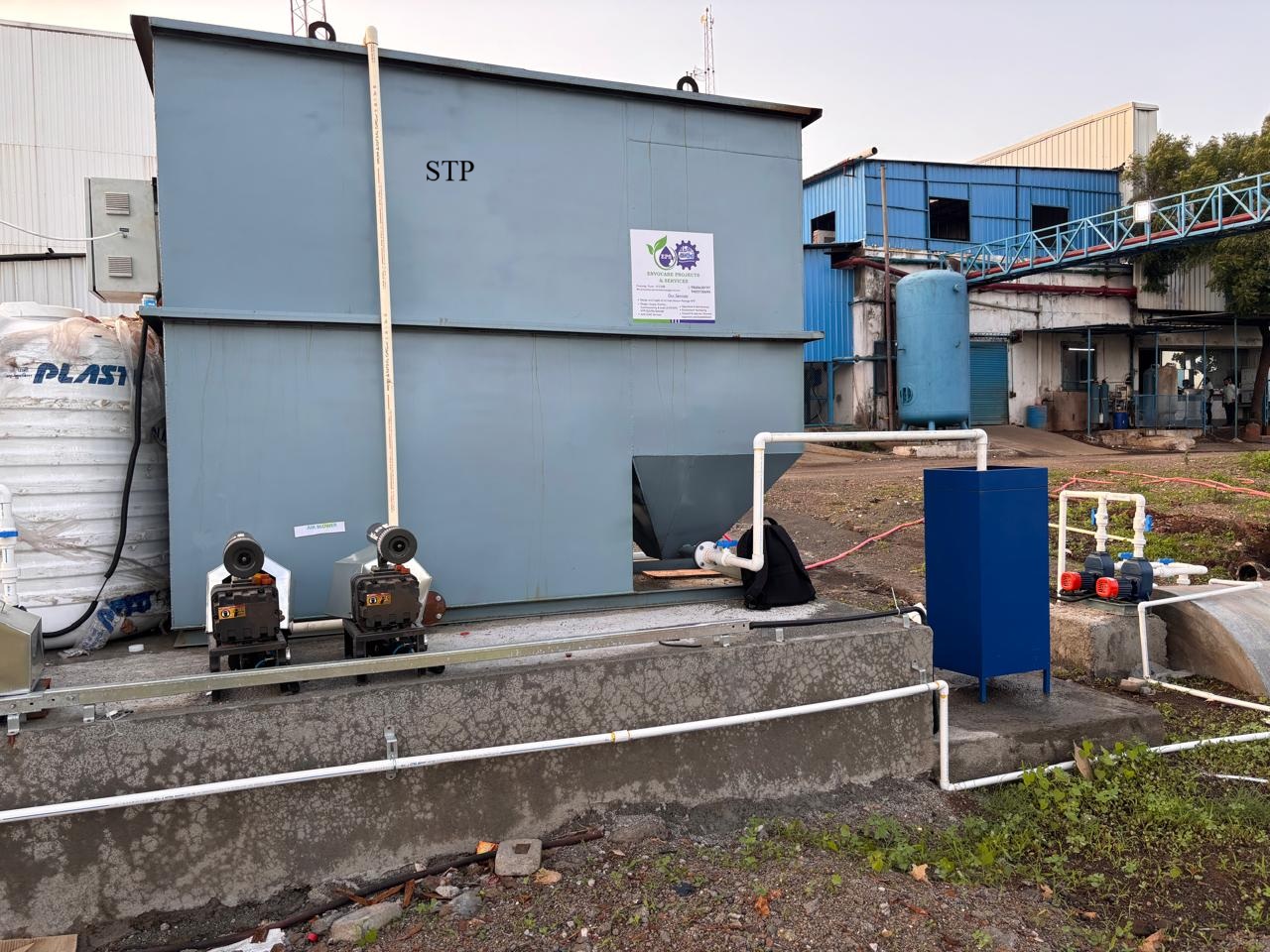
Project Overview: An industrial facility in Chakan, Maharashtra required a dedicated sewage treatment plant for domestic wastewater generated by employees, administrative facilities, toilets, canteen areas, and other domestic sources.
Envocare Projects & Services designed and commissioned a 1,000 KLD MBBR-based STP to provide reliable treatment while supporting the reuse of treated wastewater within the industrial campus.
| Project Capacity | 1,000 KLD |
|---|---|
| Technology | MBBR |
| Application | Industrial Campus – Domestic Sewage |
| Location | Chakan, Maharashtra |
| Average Flow | Approximately 850 KLD |
| Peak Flow | Approximately 1,100 KLD |
| Treated Water Reuse | Landscaping, Flushing and Utility Applications |
| Reuse Quantity | Approximately 600 KLD |
| O&M | 12 Months |
Challenge: The facility experienced considerable variation in sewage generation depending on employee occupancy, working shifts, weekends, and holidays.
Another important engineering consideration was the separation of domestic sewage from industrial process wastewater. Since process effluent can have significantly different characteristics, the sewage treatment system was designed specifically for the domestic wastewater stream.
Envocare's Solution: Envocare developed a 1,000 KLD MBBR STP with adequate equalization and biological treatment capacity to accommodate variations in wastewater flow.
Treatment Process:
Coarse Screening → Fine Screening → Grit Removal → Equalization →
MBBR → Secondary Clarification → Tertiary Filtration →
Disinfection → Treated Water Storage
The system was designed around the expected hydraulic and organic loading of the domestic sewage stream.
Wastewater Characteristics:
| Parameter | Influent | Target Treated Water |
|---|---|---|
| BOD (mg/L) | Approximately 300 | <20 |
| COD (mg/L) | Approximately 550 | <50 |
| TSS (mg/L) | Approximately 350 | <20 |
| Oil & Grease (mg/L) | Approximately 35 | <10 |
Project Outcome: The 1,000 KLD STP provided the industrial campus with a dedicated system for managing domestic sewage. Approximately 600 KLD of treated wastewater was made available for suitable reuse applications.
Project Delivered:
Engineering Highlight: The project demonstrates the importance of designing industrial-campus sewage treatment systems around actual flow variation and wastewater characteristics, rather than relying only on average daily sewage generation.
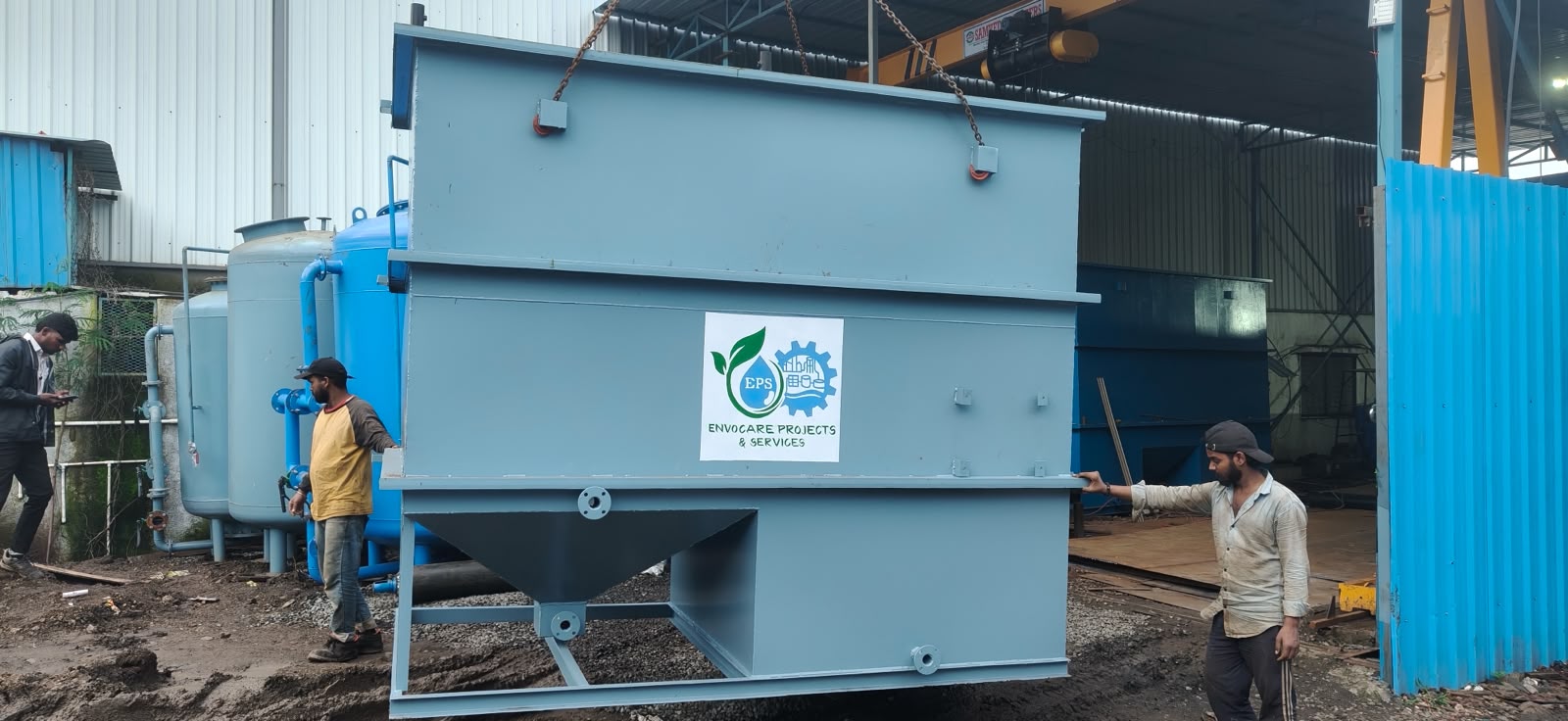
Project Overview: An existing 300 KLD sewage treatment plant at a residential development in Maharashtra was experiencing operational and treatment-performance issues. Instead of completely replacing the existing plant, Envocare Projects & Services carried out a detailed assessment and implemented a combination of process, equipment, and automation upgrades.
| Existing Capacity | 300 KLD |
|---|---|
| Actual Flow | 250–280 KLD |
| Technology | MBBR |
| Application | Residential Society |
| Location | Maharashtra, Maharashtra |
| Scope | STP Audit, Retrofit, Equipment Replacement, Process Optimization and Automation Upgrade |
| Project Duration | Approximately 45 Days |
Existing Problems:
Representative Performance Before Upgrade:
| Parameter | Before Upgrade |
|---|---|
| BOD | 75 mg/L |
| COD | 180 mg/L |
| TSS | 110 mg/L |
| Power Consumption | 420 kWh/day |
| Treated Water Reuse | 120 KLD |
Envocare's Approach: Envocare first conducted an assessment of the existing treatment process, equipment condition, hydraulic loading, and operational practices.
Retrofit Scope:
The objective was to improve plant performance while making effective use of the existing infrastructure wherever technically feasible.
Performance After Upgradation:
| Parameter | Before | After |
|---|---|---|
| BOD | 75 mg/L | <20 mg/L |
| COD | 180 mg/L | <50 mg/L |
| TSS | 110 mg/L | <20 mg/L |
| Power Consumption | 420 kWh/day | 340 kWh/day |
| Treated Water Reuse | 120 KLD | 210 KLD |
Project Outcome: Following the upgrade, the plant provided improved treatment performance and increased treated-water availability for reuse.
The representative results indicate:
Key Project Highlight: STP upgradation can often improve treatment performance and operating efficiency without completely replacing the existing treatment infrastructure.
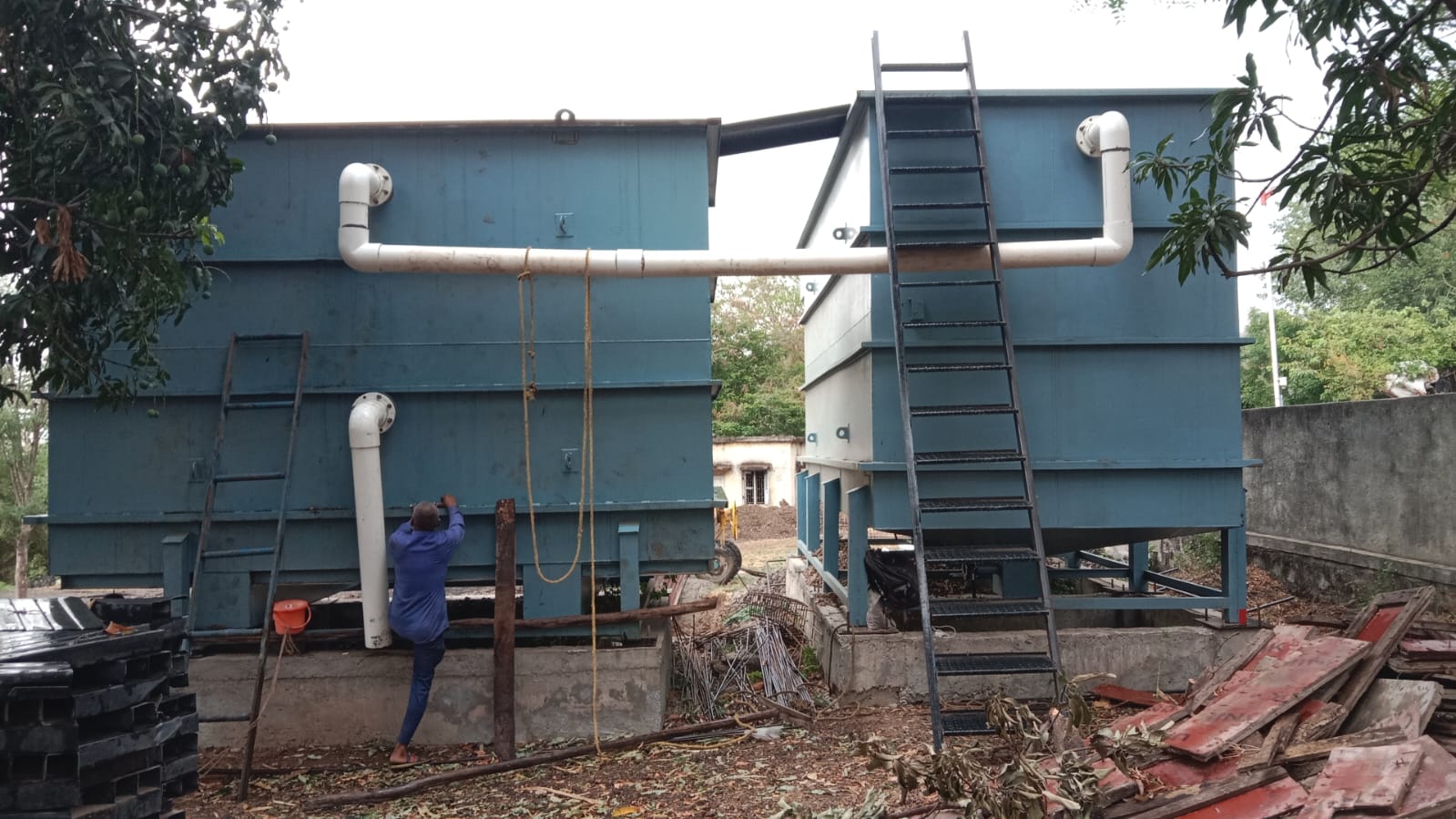
Project Overview: A hotel/resort project in Maharashtra required a compact sewage treatment plant because of limited space available for conventional wastewater-treatment infrastructure.
Envocare Projects & Services designed and supplied a 100 KLD packaged MBBR STP suitable for the project's wastewater characteristics, available space, and treated-water reuse requirements.
| Project Capacity | 100 KLD |
|---|---|
| Technology | Packaged MBBR |
| Application | Hotel / Resort |
| Location | Maharashtra |
| Average Flow | Approximately 80 KLD |
| Peak Flow | Approximately 110 KLD |
| Treated Water Reuse | Gardening and Flushing |
| Reuse Quantity | Approximately 65 KLD |
| Project Duration | Approximately 35 Days |
Challenge: Hotel wastewater generation can vary significantly depending on occupancy, events, restaurant activity, and seasonal demand. The project also had limited space for conventional civil construction.
Client Requirements:
Envocare's Solution: Envocare developed a packaged MBBR STP incorporating the required biological, clarification, filtration, and disinfection stages.
Treatment Process:
Screening → Equalization → MBBR Biological Treatment →
Clarification → Pressure Sand Filtration →
Activated Carbon Filtration → Disinfection → Treated Water Storage
The packaged configuration reduced the requirement for extensive conventional civil construction and allowed the major treatment components to be integrated into a compact arrangement.
Wastewater Characteristics:
| Parameter | Influent | Target Treated Water |
|---|---|---|
| BOD (mg/L) | Approximately 250 | <20 |
| COD (mg/L) | Approximately 450 | <50 |
| TSS (mg/L) | Approximately 300 | <20 |
| Oil & Grease (mg/L) | Approximately 40 | <10 |
Project Outcome: The 100 KLD packaged STP provided the hotel with a compact wastewater-treatment solution while enabling approximately 65 KLD of treated wastewater to be reused for suitable non-potable applications.
Project Delivered:
Key Project Highlight: A compact packaged STP can provide an effective wastewater-treatment solution for hotels and other sites where installation space and project timelines are major considerations.
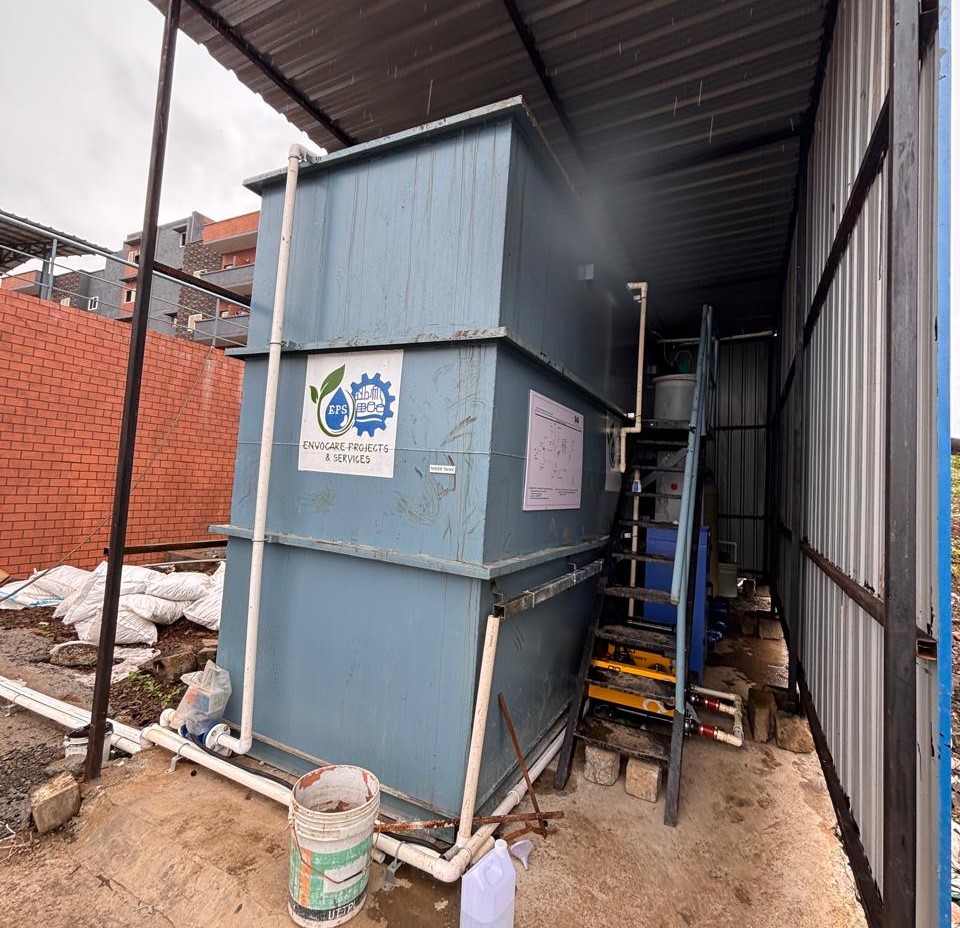
A Sewage Treatment Plant (STP) is designed to treat domestic sewage and wastewater generated from residential, commercial, institutional, industrial, and municipal activities. By removing organic matter, suspended solids, and other pollutants, an STP helps make treated water suitable for safe discharge or reuse, subject to applicable treatment standards and regulations. The major applications of Sewage Treatment Plants include:
Envocare Projects & Services is a trusted Sewage Treatment Plant Manufacturer in Maharashtra, delivering advanced wastewater treatment solutions for residential, commercial, industrial, and institutional applications. As leading manufacturers, suppliers, dealers, and service providers, we provide complete turnkey solutions including system design, manufacturing, supply, installation, commissioning, operation & maintenance, and plant upgradation. Our advanced STP systems are engineered to maximize water reuse, reduce operating costs, ensure environmental compliance, and support sustainable water management. Backed by 500+ successfully completed Water & Wastewater Projects, 50+ expert engineers and technical staff, 120+ plants under operation & maintenance, and 300+ satisfied industrial and commercial clients, we deliver reliable, customized, and high-performance sewage treatment solutions tailored to every project's requirements. Contact Us today to discuss your sewage treatment requirements and receive a customized solution.
A Sewage Treatment Plant (STP) treats domestic and commercial sewage by removing solids, organic matter, and harmful microorganisms. The treated water can be safely discharged or reused for suitable non-potable applications.
The cost of an STP depends on treatment capacity, technology, wastewater characteristics, and site conditions. The final cost is determined based on project requirements and the level of treatment required.
STP treated water is generally intended for non-potable applications rather than drinking. It can be reused for toilet flushing, gardening, landscaping, road cleaning, and cooling, depending on treatment quality and applicable requirements.
Chemical requirements vary depending on the STP design and treatment process. Chlorination and other disinfection methods may be used during tertiary treatment to control harmful microorganisms.
The main stages include preliminary treatment, primary sedimentation, secondary biological treatment, tertiary filtration and disinfection, and sludge treatment. Each stage removes specific pollutants from sewage.
Common STP technologies include MBBR, SBR, MBR, Activated Sludge Process (ASP), Extended Aeration, and Conventional STP. The suitable technology depends on capacity, wastewater characteristics, and available space.
MBBR (Moving Bed Biofilm Reactor) uses floating bio-media that support beneficial microorganisms for biological treatment. It is a compact and efficient solution for residential, commercial, and industrial applications.
SBR (Sequential Batch Reactor) treats sewage through filling, aeration, settling, and discharge cycles in a single tank. It is suitable for projects with fluctuating sewage flow.
MBR (Membrane Bioreactor) combines biological treatment with membrane filtration to produce high-quality treated water. It is suitable for advanced water reuse applications and projects with limited space.
BOD and COD indicate the level of organic pollutants in wastewater, while TSS represents suspended solid particles. STPs are designed to reduce these pollutants and improve treated water quality.
Treated STP water can be reused for toilet flushing, gardening, landscaping, road cleaning, and cooling systems. Reuse helps conserve freshwater and supports sustainable water management.
STPs are commonly used in residential societies, commercial buildings, hotels, hospitals, schools, industries, airports, railway stations, and municipal areas. They help manage sewage safely and efficiently.
An STP improves wastewater quality, reduces water pollution, and supports water recycling. It also helps conserve freshwater, reduce operating costs, and meet environmental requirements.
Sludge collected during treatment is processed and dewatered for safe disposal or beneficial reuse. Depending on the system, sludge may also undergo further treatment such as anaerobic digestion.
Envocare provides complete STP solutions including design, manufacturing, installation, commissioning, and operation & maintenance. The company offers customized and energy-efficient solutions using technologies such as MBBR, SBR, MBR, and ASP.
Envocare Projects & Services provides complete Water & Wastewater Treatment Solutions including STP, ETP, WTP, RO and ZLD systems for industrial and commercial applications across India.
© Envocare Projects & Services. All Rights Reserved.