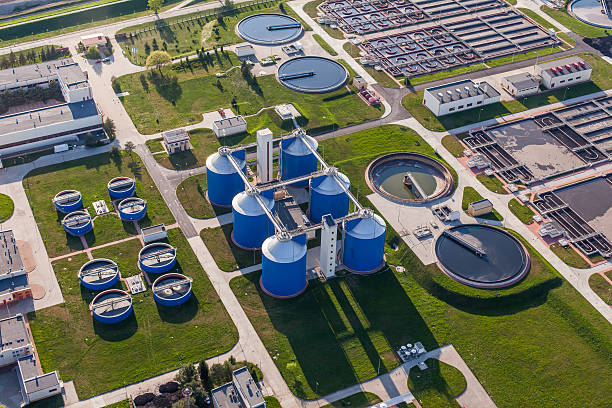
Envocare Projects & Services is a leading Industrial Water Treatment Plant manufacturer, supplier, dealer, and service provider in Pune, offering advanced and customized water treatment solutions for diverse industrial applications. With 500+ successfully completed Water & Wastewater Treatment Projects, a team of 50+ experienced engineers and technical professionals, 120+ treatment plants under operation and maintenance, and the trust of 300+ satisfied clients, we deliver reliable and cost-effective Industrial Water Treatment Plants designed around specific water quality and process requirements
Our solutions include Raw Water Treatment, Process Water Treatment, RO, UF, NF, DM, Water Softening, Boiler Feed Water Treatment, Cooling Water Treatment, and packaged water treatment systems, supported by complete services from design and manufacturing to installation, commissioning, operation, maintenance, and plant upgradation. Our focus on energy efficiency, water recovery, automation, and sustainable water management helps industries improve operational efficiency, reduce water consumption and maintenance costs, and achieve reliable long-term performance.
An An Industrial Water Treatment Plant (Industrial WTP) is a specialized water purification system designed to treat raw water from sources such as borewells, rivers, lakes, municipal supplies, and surface water and convert it into high-quality water suitable for industrial applications. It removes impurities such as suspended solids, dissolved salts, hardness, heavy metals, organic contaminants, and microorganisms using treatment technologies such as filtration, sedimentation, water softening, ultrafiltration (UF), reverse osmosis (RO), nanofiltration (NF), demineralization (DM), UV, and ozone treatment. The treated water can be used for process water, boiler feed water, cooling towers, manufacturing, washing, and other industrial requirements while helping protect equipment from scaling and corrosion, reduce water consumption, and support water reuse and sustainable industrial operations.
As an experienced industrial water and wastewater treatment plant manufacturer, Envocare Projects & Services designs, manufactures, supplies, installs, commissions, and provides operation and maintenance support for a wide range of water and wastewater treatment systems. Our treatment plants are engineered and manufactured according to specific feed-water quality, process requirements, treatment objectives, water-reuse needs, and applicable discharge standards. Our manufacturing and engineering capabilities cover conventional water treatment, advanced membrane systems, ion-exchange technologies, industrial wastewater treatment, water recycling, and zero liquid discharge solutions:
By combining these technologies according to site-specific requirements, Envocare Projects & Services delivers complete industrial water and wastewater treatment solutions — from raw-water treatment and process-water purification to effluent recycling and zero liquid discharge.
As Industrial Water Treatment Plant Manufacturers in Pune, we follow a structured multi-stage treatment approach that efficiently transforms raw water into reusable or safe discharge water through physical, chemical, biological, and advanced purification processes.
| Step | Steps of an Industrial Water Treatment Plant | Description |
|---|---|---|
| 01 | Pre-Treatment (Screening & Equalization) | Raw water is screened to remove debris and passed through equalization tanks where oils and grease are separated. |
| 02 | Primary Treatment (Coagulation & Sedimentation) | Chemicals are added to form flocs, which settle in clarifiers through the Sedimentation Process as sludge, leaving clearer water. |
| 03 | Secondary Treatment (Biological Treatment) | Microorganisms break down organic pollutants in aeration tanks, improving water quality. |
| 04 | Tertiary Treatment (Filtration & Softening) | Fine filtration and ion exchange remove remaining particles and perform effective Hardness Removal of minerals causing water hardness. |
| 05 | Advanced Treatment (RO / UF / NF Systems) | Membrane systems remove dissolved salts, bacteria, and micro-contaminants through advanced Water Purification System technologies for high purity water. |
| 06 | Disinfection & Output (UV / Ozone Treatment) | Final treatment using an advanced Disinfection System ensures safe water for reuse in processes or controlled discharge. |
| 07 | Sludge Handling (Dewatering & Disposal) | Collected sludge is treated, dewatered, and safely disposed or reused where applicable. |
Our water and wastewater treatment plants are designed with application-specific technologies to deliver reliable treatment, efficient operation, and consistent water quality. The table below highlights the key technical specifications across different plant types and treatment systems.
| Category | WTP | RWTP | RO | UF | NF | Softener | DM | EDI | ETP | STP | TTP | ZLD |
|---|---|---|---|---|---|---|---|---|---|---|---|---|
| Full Name | Water Treatment Plant | Raw Water Treatment Plant | Reverse Osmosis Plant | Ultrafiltration Plant | Nanofiltration Plant | Water Softening Plant | Demineralization Plant | Electrodeionization Plant | Effluent Treatment Plant | Sewage Treatment Plant | Tertiary Treatment Plant | Zero Liquid Discharge Plant |
| Primary Purpose | General water treatment for industrial and process applications. | Removal of suspended solids, turbidity, colour and other impurities from raw water. | Reduction of dissolved salts, TDS, ions and selected contaminants. | Removal of suspended solids, colloids, bacteria and high-molecular-weight contaminants. | Reduction of hardness, divalent ions, selected dissolved organics and partial TDS. | Removal of calcium and magnesium hardness from water. | Removal of dissolved ionic impurities to produce low-conductivity water. | Final deionization and polishing for high-purity water production. | Treatment of industrial wastewater for reuse or compliant discharge. | Treatment of domestic sewage for safe disposal or reuse. | Advanced polishing of treated wastewater for reuse and recycling. | Maximum water recovery with no liquid discharge from the designated process stream. |
| Feed Water | Raw water, municipal water or industrial process water. | River, lake, reservoir, borewell or other raw-water source. | Pretreated and filtered water suitable for RO membranes. | Raw or pretreated water with controlled suspended solids. | Pretreated water suitable for NF membranes. | Raw or filtered water containing hardness. | Filtered or RO-treated water with controlled turbidity and organics. | RO permeate or suitably treated DM water. | Industrial wastewater generated from manufacturing or process operations. | Domestic sewage from residential, commercial or institutional facilities. | Secondary-treated or biologically treated wastewater. | Concentrated industrial effluent, RO reject or high-TDS wastewater. |
| Design Capacity | Typically 10–5,000 m³/day, as per project requirement. | Typically 10–10,000 m³/day, as per raw-water demand. | Typically 1–5,000 m³/day, based on permeate requirement. | Typically 1–5,000 m³/day, based on filtrate requirement. | Typically 1–5,000 m³/day, based on permeate requirement. | Typically 1–2,000 m³/hr, depending on application. | Typically 1–500 m³/hr, depending on required DM-water production. | Typically 1–200 m³/hr, depending on high-purity water demand. | Typically 10–10,000 m³/day, based on wastewater generation. | Typically 10–10,000 m³/day, based on sewage generation. | Typically 10–5,000 m³/day, based on reuse demand. | Typically 10–5,000 m³/day, based on effluent flow and recovery requirements. |
| Operating Hours | Typically 20–24 hours/day. | Typically 20–24 hours/day. | Typically 20–24 hours/day. | Typically 20–24 hours/day. | Typically 20–24 hours/day. | Automatic operation with regeneration cycles as required. | Automatic operation with regeneration cycles as required. | Typically 20–24 hours/day. | Typically 20–24 hours/day. | Typically 20–24 hours/day. | Typically 20–24 hours/day. | Typically 20–24 hours/day. |
| Typical Process | Screening → coagulation → clarification → filtration → disinfection → treated-water storage. | Screening → coagulation → flocculation → clarification → filtration → disinfection. | Pretreatment → cartridge filtration → high-pressure pump → RO membranes → permeate storage. | Pretreatment → UF membranes → filtrate collection → backwash/CIP. | Pretreatment → cartridge filtration → NF membranes → permeate collection. | Filtration → ion-exchange softener → regeneration → softened-water storage. | Cation exchanger → degasser → anion exchanger → mixed-bed polisher. | RO/DM pretreatment → EDI modules → high-purity water storage. | Screening → equalization → pH correction → coagulation/flocculation → clarification → biological treatment → tertiary treatment. | Screening → equalization → biological treatment → secondary clarification → filtration → disinfection. | Filtration → activated carbon/UF/RO → disinfection → treated-water storage. | ETP → UF → RO → evaporator → crystallizer → solid salt handling. |
| Pretreatment | Screening, straining, coagulation and filtration as required. | Bar screening, grit removal, coagulation and flocculation as required. | Multimedia filter, activated carbon filter, softener and cartridge filter as required. | Screening, multimedia filtration or other pretreatment as required. | Multimedia filtration, activated carbon and cartridge filtration as required. | Multimedia or pressure sand filtration as required. | RO, multimedia filtration or activated carbon pretreatment as required. | RO/DM pretreatment and cartridge filtration as required. | Screening, equalization and primary treatment. | Screening, grit removal and equalization. | Secondary treatment followed by fine filtration. | Complete ETP pretreatment followed by membrane pretreatment. |
| Core Treatment | Clarification and pressure filtration. | Coagulation, flocculation, clarification and filtration. | Pressure-driven membrane separation. | Low-pressure membrane filtration. | Pressure-driven nanofiltration membrane separation. | Sodium-cycle ion exchange. | Ion exchange using cation and anion resins. | Electrodeionization using ion-selective membranes and resin. | Physical, chemical and biological treatment. | Biological treatment followed by clarification and tertiary treatment. | Advanced filtration and membrane treatment. | Membrane concentration followed by thermal evaporation and crystallization. |
| Membrane Technology | Optional, depending on required water quality. | Optional, depending on raw-water quality. | TFC spiral-wound RO membranes. | Hollow-fiber or equivalent UF membranes. | Spiral-wound NF membranes. | Not normally applicable. | Not normally applicable; RO pretreatment may be used. | Ion-selective membranes integrated with EDI modules. | UF/RO may be incorporated for advanced treatment. | MBR membranes may be used where specified. | UF/RO may be used according to reuse requirements. | UF and RO membranes typically used before thermal concentration. |
| Ion Exchange | Optional. | Optional. | Not normally applicable. | Not applicable. | Not normally applicable. | Strong-acid cation exchange resin. | Cation and anion exchange resins with mixed-bed polishing where required. | Continuous electro-deionization using ion-exchange resin and membranes. | Optional for specific industrial contaminants. | Not normally applicable. | Optional according to final water-quality requirements. | Optional according to process chemistry. |
| Filtration | Pressure sand filter / multimedia filter / activated carbon filter. | Pressure sand filter / multimedia filter / activated carbon filter. | Multimedia filter, activated carbon filter and cartridge filter. | UF membrane provides fine filtration. | Multimedia filter, activated carbon and cartridge filter. | Pressure sand/multimedia filter before softening. | Filtration as required to protect ion-exchange equipment. | Cartridge filtration before EDI. | Pressure sand filter / activated carbon filter / membrane filtration as required. | Pressure sand filter / activated carbon filter where required. | Fine filtration / UF / RO as required. | UF provides membrane pretreatment before RO. |
| Chemical Dosing | Coagulant, pH correction chemical and disinfectant as required. | Coagulant, flocculant, pH correction chemical and disinfectant. | Antiscalant, acid/alkali and cleaning chemicals as required. | CIP and membrane-cleaning chemicals as required. | Antiscalant, pH correction and cleaning chemicals as required. | Sodium chloride brine for resin regeneration. | Acid and caustic chemicals for resin regeneration. | Chemicals for EDI feed conditioning and cleaning as required. | Coagulant, polymer, acid/alkali and other process chemicals. | Process chemicals and disinfectant as required. | pH correction and disinfectant as required. | Acid, alkali, antiscalant and other process chemicals as required. |
| Disinfection | Chlorination / UV / ozone as required. | Chlorination / UV / ozone as required. | Post-treatment disinfection where required. | UV / chlorination where required. | UV / chlorination where required. | As required by final application. | As required by final application. | As required by final application. | As required for reuse or discharge. | Chlorination / UV. | UV / chlorination / ozone as required. | As required by the final water-reuse system. |
| Pumps | Centrifugal pumps sized for required flow and head. | Centrifugal raw-water and transfer pumps. | High-pressure multistage centrifugal pump. | Centrifugal feed and backwash pumps. | High-pressure feed pump. | Centrifugal feed and transfer pumps. | Centrifugal feed and transfer pumps. | Feed/booster pumps as required. | Centrifugal/submersible pumps according to process duty. | Submersible/centrifugal pumps as applicable. | Centrifugal transfer and feed pumps. | High-pressure feed and circulation pumps as required. |
| Piping Material | HDPE / UPVC / CPVC / FRP / MS / SS as applicable. | HDPE / UPVC / MS / SS as applicable. | UPVC / CPVC / FRP / SS according to pressure and service. | UPVC / HDPE / SS / FRP as applicable. | UPVC / FRP / SS according to pressure and chemical service. | UPVC / HDPE / FRP. | FRP / UPVC / PP / SS according to chemical service. | UPVC / PP / PVDF / SS as required. | HDPE / UPVC / FRP / MS / SS. | HDPE / UPVC / FRP / SS as applicable. | HDPE / UPVC / FRP / SS. | FRP / HDPE / SS / suitable corrosion-resistant materials. |
| Valves | Butterfly, ball, gate, check and automatic valves as required. | Butterfly, gate, check and automatic valves. | Ball, butterfly, check and high-pressure valves. | Butterfly, ball, diaphragm and automatic valves. | High-pressure ball/butterfly/check valves. | Automatic multiport/diaphragm valves. | Automatic regeneration valves and manual isolation valves. | Automatic isolation and control valves. | Butterfly, gate, check, diaphragm and control valves. | Butterfly, gate, check and air-release valves. | Automatic/manual control valves as required. | High-pressure, high-temperature and corrosion-resistant valves as applicable. |
| Instrumentation | Flow, pressure, level, pH, turbidity and conductivity. | Flow, pressure, level, pH, turbidity and chlorine residual. | Feed/permeate/reject flow, pressure, conductivity, pH and temperature. | Feed/filtrate flow, pressure, turbidity and membrane differential pressure. | Feed/permeate/reject flow, pressure, conductivity and pH. | Flow, pressure, level and hardness. | Flow, pressure, conductivity/resistivity, pH and silica where required. | Flow, pressure, conductivity/resistivity and temperature. | Flow, pH, DO, ORP, level, turbidity and conductivity as required. | Flow, pH, DO, level, turbidity and other process parameters. | Flow, turbidity, conductivity, pH and level. | Flow, pressure, conductivity, level, temperature and process-specific instruments. |
| Control System | PLC with HMI for automatic/semi-automatic operation. | PLC with HMI for process sequencing and equipment control. | PLC/HMI with automatic operation and safety interlocks. | PLC/HMI with automatic filtration, backwash and CIP sequences. | PLC/HMI with automatic membrane operation and protection. | Automatic timer/volume-based regeneration control. | PLC/HMI with automatic regeneration sequence. | PLC/HMI with automatic EDI operation and interlocks. | PLC/SCADA with automatic process control. | PLC/SCADA with automatic aeration and treatment control. | PLC/SCADA with automatic filtration and disinfection control. | PLC/SCADA with integrated control of membrane and thermal systems. |
| Electrical Supply | Typically 415 V, 3-phase, 50 Hz. | Typically 415 V, 3-phase, 50 Hz. | Typically 415 V, 3-phase, 50 Hz. | Typically 415 V, 3-phase, 50 Hz. | Typically 415 V, 3-phase, 50 Hz. | Typically 415 V, 3-phase, 50 Hz. | Typically 415 V, 3-phase, 50 Hz. | Typically 415 V, 3-phase, 50 Hz. | Typically 415 V, 3-phase, 50 Hz. | Typically 415 V, 3-phase, 50 Hz. | Typically 415 V, 3-phase, 50 Hz. | Typically 415 V, 3-phase, 50 Hz. |
| Motor Control | DOL / star-delta / VFD according to motor rating and duty. | DOL / star-delta / VFD according to motor rating and duty. | VFD for high-pressure pump where required. | DOL / star-delta / VFD according to equipment duty. | VFD for high-pressure feed pump where required. | DOL / VFD as applicable. | DOL / VFD as applicable. | VFD where required for process control. | DOL / star-delta / VFD according to motor rating. | DOL / star-delta / VFD for pumps and blowers. | VFD for variable-flow applications. | VFD for feed, circulation and thermal-system pumps. |
| Backwash | Automatic/semi-automatic filter backwash. | Automatic filter backwash with air scour where required. | Pretreatment filter backwash; RO membranes cleaned by CIP. | Automatic UF backwash and chemically enhanced backwash. | Pretreatment filter backwash; NF membranes cleaned by CIP. | Automatic softener regeneration and rinse cycle. | Resin regeneration and rinse sequence. | EDI cleaning/conditioning as recommended by manufacturer. | Filter backwash where tertiary filters are provided. | Filter backwash where tertiary filters are provided. | Automatic filter backwash where applicable. | UF/pretreatment backwash system as required. |
| CIP System | Not normally required. | Not normally required. | Dedicated RO CIP system. | Dedicated UF CIP system. | Dedicated NF CIP system. | Not normally required. | Resin regeneration system provided instead of conventional CIP. | Cleaning/conditioning system as recommended by manufacturer. | Provided for membrane systems where applicable. | Provided for MBR systems where applicable. | Provided where UF/RO membranes are installed. | Dedicated membrane CIP system. |
| Recovery | Typically high, depending on process configuration. | Typically high, subject to sludge and backwash losses. | Typically 50–80%, depending on feed-water chemistry and design. | Typically high, depending on backwash and process losses. | Typically 60–90%, depending on feed chemistry and design. | High, with regeneration and rinse losses. | High, subject to regeneration and rinse losses. | High, subject to feed quality and concentrate flow. | Project-specific according to treatment and reuse objectives. | High, subject to sludge and process losses. | High, depending on treatment configuration. | Maximum practical water recovery according to feed chemistry and process design. |
| Sludge / Waste Handling | Backwash water and clarification sludge as applicable. | Clarifier sludge collection and dewatering as required. | RO reject and cartridge-filter waste. | Backwash and CIP waste. | NF concentrate and CIP waste. | Brine and regeneration wastewater. | Acid/caustic regeneration wastewater. | Concentrate and cleaning waste. | Primary and biological sludge handling and dewatering. | Biological sludge collection, thickening and dewatering. | Backwash water and concentrated reject where applicable. | Concentrate, evaporator residue and crystallized salts. |
| Typical Product Use | Industrial/process water, utility water and general applications. | Industrial process water and utility-water pretreatment. | Boiler feed, process water, cooling makeup and high-quality water applications. | RO pretreatment, process water and low-turbidity applications. | Partial desalination, process water and hardness reduction. | Boiler makeup, cooling tower makeup and process water. | Boiler feed, process water and high-purity applications. | Electronics, pharmaceutical and high-purity industrial applications. | Industrial water reuse or compliant discharge. | Flushing, gardening, irrigation and other approved reuse applications. | Cooling, process water, irrigation and other water-reuse applications. | Maximum water recovery with solid salt disposal/recovery. |
| Performance Guarantee | Guaranteed treated-water flow and specified water quality. | Guaranteed treated-water flow and specified turbidity/quality. | Guaranteed permeate flow, recovery and permeate TDS/conductivity at specified feed conditions. | Guaranteed filtrate flow, turbidity and membrane performance. | Guaranteed permeate flow, quality and recovery. | Guaranteed service flow and outlet hardness. | Guaranteed DM-water flow, conductivity/resistivity and silica where specified. | Guaranteed product-water flow and conductivity/resistivity. | Guaranteed treated-effluent quality against approved design criteria. | Guaranteed treated-sewage quality against approved design criteria. | Guaranteed treated-water quality for specified reuse application. | Guaranteed water recovery and no liquid discharge from the designated process stream. |
| Testing & Commissioning | Hydrotest, electrical testing, calibration, trial operation and performance testing. | Hydrotest, equipment testing, calibration and performance trial. | Pressure testing, electrical testing, instrument calibration and membrane performance testing. | Hydraulic testing, membrane integrity testing and performance verification. | Hydraulic testing, membrane performance and water-quality testing. | Hardness testing, regeneration-cycle testing and hydraulic testing. | Resin inspection, regeneration testing, conductivity testing and hydraulic testing. | Electrical testing, conductivity/resistivity testing and performance verification. | Hydraulic, electrical, biological and treated-effluent performance testing. | Hydraulic, electrical, biological and treated-water performance testing. | Hydraulic, electrical and treated-water quality testing. | Integrated membrane, evaporation, crystallization and recovery performance testing. |
| Safety Features | Dry-run, overflow, overload and process-level protection. | Pump dry-run, overflow, level and equipment protection. | High/low-pressure, high-conductivity, low-level, dry-run and pump overload protection. | High/low-pressure, flow, differential-pressure and pump protection. | High/low-pressure, flow and pump protection. | Brine-level, valve-sequence and pump protection. | Chemical handling, level, pressure and regeneration interlocks. | Flow, conductivity, pressure and electrical interlocks. | Tank level, pH, DO, pump and blower protection. | Tank level, DO, blower, pump and process interlocks. | Level, pressure, flow and membrane protection. | High-temperature, high-pressure, level, conductivity and process safety interlocks. |
| Construction | Industrial-duty construction using corrosion-resistant materials suitable for service. | Heavy-duty construction suitable for raw-water conditions. | Corrosion-resistant skid and equipment construction. | Corrosion-resistant skid and membrane equipment construction. | Corrosion-resistant construction suitable for pressure and chemical service. | Chemical-resistant FRP/HDPE construction. | Chemical-resistant FRP/rubber-lined/SS construction as applicable. | High-purity compatible materials for wetted components. | Heavy industrial-duty construction suitable for wastewater service. | Heavy-duty construction suitable for sewage treatment conditions. | Industrial-duty construction suitable for treated-water reuse. | Heavy-duty corrosion- and temperature-resistant construction. |
| Documentation | PFD, P&ID, GA drawings, equipment datasheets, O&M manual and test certificates. | PFD, P&ID, hydraulic calculations, GA drawings and O&M manual. | P&ID, GA, membrane datasheets, pump curves, electrical drawings and O&M manual. | P&ID, membrane datasheets, GA drawings, control philosophy and O&M manual. | P&ID, membrane datasheets, GA drawings, pump curves and O&M manual. | P&ID, vessel/resin datasheets, regeneration sequence and O&M manual. | P&ID, vessel/resin datasheets, regeneration sequence and O&M manual. | P&ID, EDI datasheet, electrical drawings, control philosophy and O&M manual. | Process design, mass balance, P&ID, GA, equipment datasheets and O&M manual. | Process design, P&ID, GA, equipment datasheets and O&M manual. | P&ID, GA, membrane datasheets, equipment datasheets and O&M manual. | Complete process design, mass balance, P&ID, GA, equipment datasheets and O&M manual. |
As Industrial Water Treatment Plant Services in Pune, we design advanced treatment systems equipped with automation, energy efficiency, and robust engineering to deliver consistent performance and long-term operational reliability.
As Industrial Water Treatment Plant Service Providers in Pune, we provide efficient water treatment solutions that enhance reuse, reduce operational costs, ensure environmental compliance, and improve overall industrial productivity.
An Industrial Water Treatment Plant is designed to treat and purify water used across various industrial processes. Depending on the industry and water quality requirements, these systems can remove suspended solids, dissolved impurities, chemicals, oils, heavy metals, and other contaminants. Treated water can then be reused in production, cooling, boiler operations, cleaning, or safely discharged after meeting applicable standards.
Industrial water treatment plants help businesses maintain consistent water quality, protect machinery, improve process efficiency, reduce freshwater consumption, and manage wastewater responsibly. The appropriate treatment technology depends on the water source, industry, contaminants present, required water quality, and intended end use.
Envocare Projects & Services is a trusted Industrial Water Treatment Plant Manufacturer in Pune, delivering advanced water treatment solutions for a wide range of industrial applications. As leading manufacturers, suppliers, dealers, and service providers, we offer complete turnkey solutions including system design, manufacturing, supply, installation, commissioning, operation & maintenance, and plant upgradation. Our Industrial Water Treatment Plants are engineered to improve water quality, maximize water recovery, reduce operating costs, and ensure compliance with industrial and environmental standards. Backed by 500+ successfully completed Water & Wastewater Projects, 50+ expert engineers and technical staff, 120+ plants under operation & maintenance, and 300+ satisfied industrial and commercial clients, we deliver reliable, customized, and sustainable water treatment solutions that support long-term industrial growth. Contact Us today to discuss your industrial water treatment requirements and receive a customized solution.
An Industrial Water Treatment Plant is a system designed to clean and treat water used in industries for safe reuse or discharge. It removes impurities, chemicals, and contaminants to ensure quality water output.
It helps industries manage wastewater safely and meet environmental regulations. It also reduces water wastage and supports sustainable operations.
It works through stages like screening, chemical treatment, filtration, and disinfection. Each step removes specific impurities to produce clean usable water.
Wastewater treatment handles general used water from industries or processes. Effluent treatment specifically treats discharged industrial liquid waste before release.
Common technologies include filtration, biological treatment, reverse osmosis, and UV disinfection. These methods ensure high-quality and safe water output.
Envocare Projects & Services provides complete Water & Wastewater Treatment Solutions including STP, ETP, WTP, RO and ZLD systems for industrial and commercial applications across India.
© Envocare Projects & Services. All Rights Reserved.